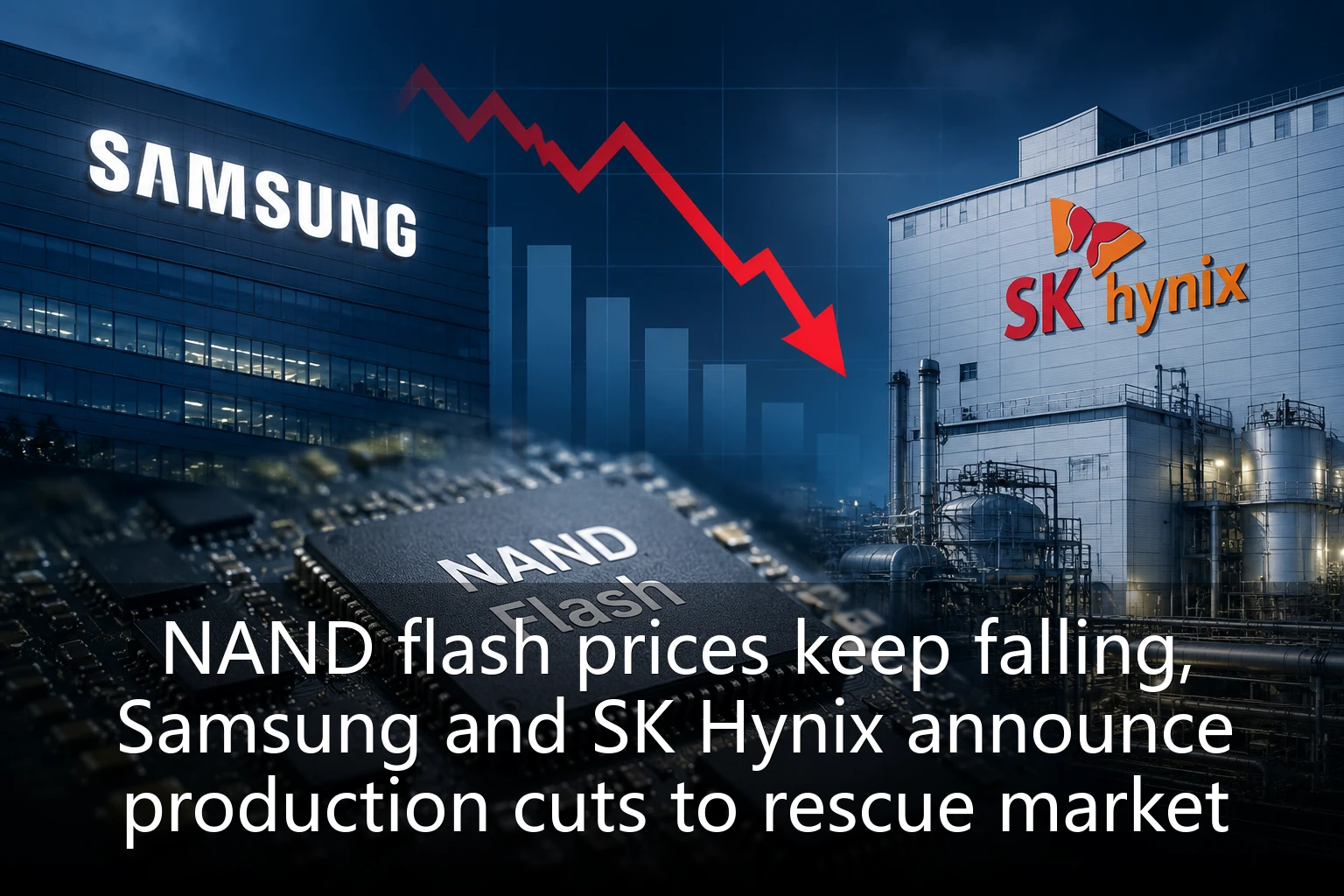
NAND flash market under sustained pressure, prices hit new lows for the year

On July 29, 2026, the latest update from the memory chip market: NAND flash prices, after months of decline, still show no signs of stopping. According to the latest data from industry research firm TrendForce, on July 28, the spot average price of mainstream 512Gb TLC NAND chips fell to $2.48, down 8.5% from early July and a sharp 32% year-over-year decline. Meanwhile, 1Tb QLC chip prices have also fallen below the $4 mark, with pessimistic sentiment spreading across the market.

This round of price declines is mainly due to weak demand in consumer electronics. Shipments of smartphones, PCs, and other end products continue to decrease, while previously expanded NAND capacity is still being released, exacerbating oversupply. Although AI servers provide some boost for high-capacity SSDs, overall demand cannot absorb the massive inventory. More concerning to the market is that downstream module manufacturers and channel distributors are generally adopting a destocking strategy, further compressing spot transaction volumes.

Samsung and SK Hynix urgently cut capacity

Facing rapid price drops, the two NAND giants responded first. On July 28, Samsung Electronics issued a statement saying it will adjust its NAND production lines at its Pyeongtaek factory and Xi'an plant in China, with some lines shifting to equipment maintenance or reducing wafer input. The overall NAND capacity is expected to decrease by about 12%. This is Samsung's first explicit production cut since 2024; previously it had responded by optimizing product mix rather than directly reducing output.

Following suit, SK Hynix announced on July 29 that it will significantly reduce NAND output at its M16 plant and delay the mass production timeline for next-generation 300-layer NAND. SK Hynix said it will prioritize consuming existing inventory in the short term, and the pace of new capacity investment will be adjusted dynamically based on market demand. External estimates suggest its production cut may be between 10% and 15%.

The combined production cuts of the two giants affect about 12%-15% of global NAND capacity. If other manufacturers follow, the supply-demand imbalance could ease by the end of the third quarter. However, the market generally believes the effects of the cuts will take 2-3 months to materialize, with prices still under pressure in the short term.

DRAM and HBM present a sharp contrast

Unlike the bleak NAND market, the DRAM market shows divergence. On one hand, consumer-grade DDR4 and DDR5 memory chip prices saw a slight rebound in late July, with gains of about 3%-5%, mainly due to recovering server memory demand and restocking by some PC OEMs. On the other hand, the HBM (high-bandwidth memory) market remains red-hot; the quoted price for HBM3E 12-layer stacks has surged from $15/Gb at the beginning of this year to $21/Gb, a 40% increase, with supply still unable to meet demand. Strong demand for HBM from AI chip giants NVIDIA and AMD has left Samsung, SK Hynix, and Micron's HBM capacity fully booked.

Interestingly, the production cut plans of Samsung and SK Hynix mainly target traditional NAND, not HBM or DRAM. This indicates that manufacturers are strategically shifting resources to high-value areas. Analysts at TrendForce point out that NAND production cuts will drag down revenue in the short term but help rebuild market confidence and prevent a price collapse. In the long run, with growing demand for high-capacity storage from the AI inference side, the NAND market is expected to recover in 2027.

Spot market price snapshot (2026-07-29)

The following are the latest spot prices for major memory chips:

  • 512Gb TLC NAND chip: $2.48 (-1.2% daily drop)
  • 1Tb QLC NAND chip: $3.92 (-0.8% daily drop)
  • DDR5 16Gb (2GB) chip: $4.35 (+0.5% daily gain)
  • DDR4 8Gb (1GB) chip: $1.82 (+0.3% daily gain)
  • HBM3E 8-layer stack: $165/unit (flat)
  • HBM3E 12-layer stack: $248/unit (+2.1% weekly gain)

Sources: TrendForce, DRAMeXchange, IC Insights.

Outlook: Will production cuts be a turning point?

Opinions are divided on the NAND outlook. Optimists believe that Samsung and SK Hynix's production cut stance is clear, and if Micron and Western Digital/Kioxia follow, supply-side contraction will effectively support prices. Historically, after a production cut announcement, spot prices typically stabilize within 4-8 weeks. Pessimists point out that current inventory levels are still high and downstream demand recovery is weak; production cuts may only slow the decline rather than reverse the trend.

For buyers, this is a window to lock in long-term contracts at low prices, but they must be wary of further price drops. It is recommended to closely monitor manufacturers' capacity dynamics and end-demand indicators, and flexibly adjust procurement strategies. For investors, NAND-related stocks face short-term pressure, but production cuts benefit the long-term competitiveness of leading companies, making them candidates for bottom-fishing.

Setmal Tech will continue to track memory chip price movements, providing real-time quotes and in-depth analysis. Please follow our Chip Memory Real-Time Price column to seize market opportunities.