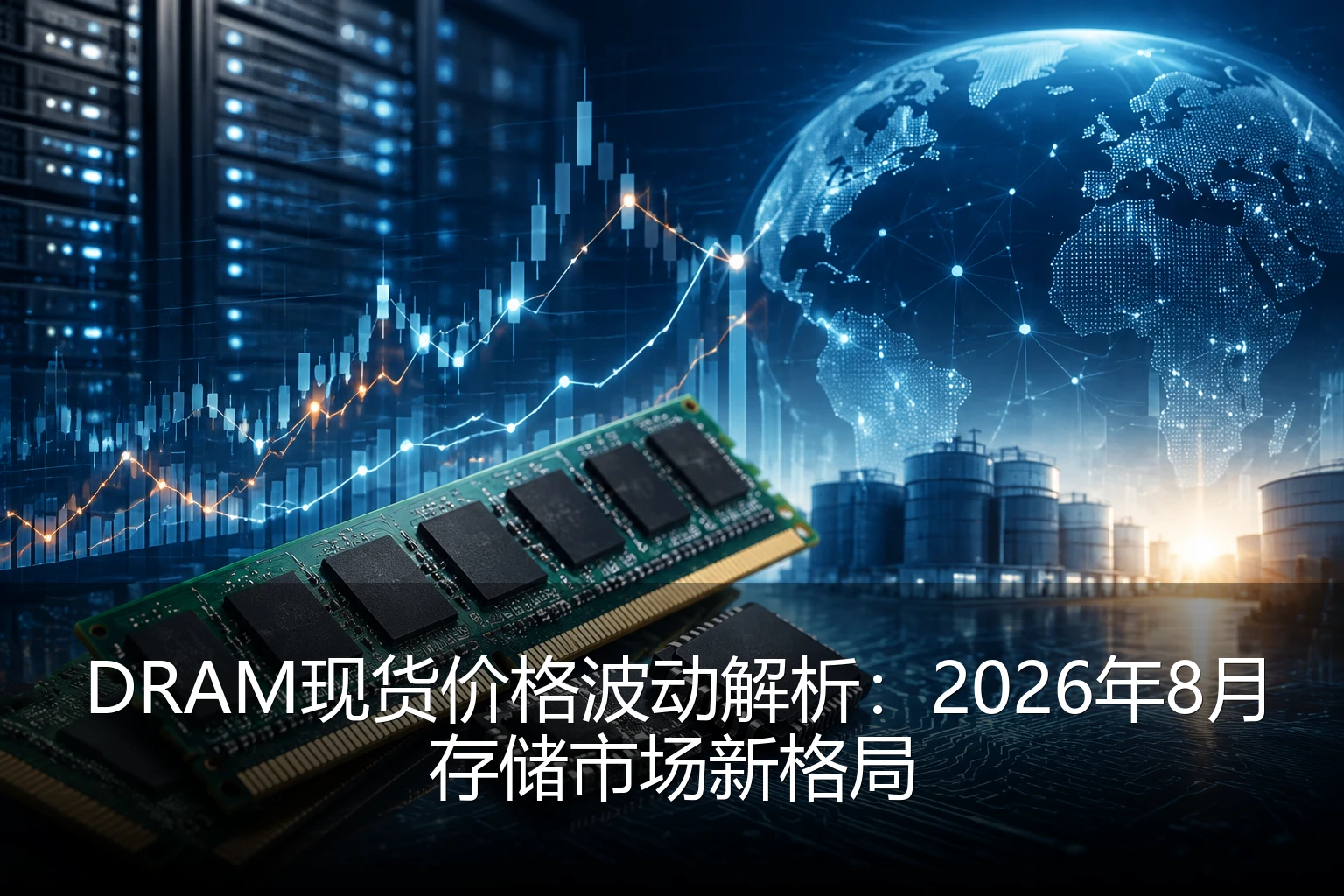
Analysis of DRAM Spot Price Fluctuations: New Pattern of Storage Market in August 2026

In August 2026, the global DRAM market shows complex and changing price trends. With the continuous expansion of artificial intelligence, cloud computing, and big data applications, the demand structure for memory chips is undergoing profound changes. This article will provide an in-depth analysis of the current price dynamics, influencing factors, and future trends of the DRAM spot market, providing decision-making references for related companies in the industry chain.

1. Latest Developments in DRAM Spot Market

According to the latest market data, the DRAM spot price in early August 2026 shows a structural adjustment trend. Among them, DDR5 memory module prices continue to rise, increasing by 3.2% compared to the same period last month, reaching a new high in the past six months; while DDR4 memory prices are relatively stable, with some specifications even showing slight回调.

From the application field, server-grade DRAM products have strong demand, especially HBM (High Bandwidth Memory) products that support AI computing are in short supply, with prices increasing by over 20% since the beginning of the year. In contrast, consumer-grade DRAM products face certain pressure, with some specifications' prices decreasing by about 8% since the beginning of the year, reflecting the weak performance of the terminal consumer market.

2. Driving Factors Behind Price Trends

1. Surge in AI and Data Center Demand

In 2026, AI applications entered an explosive period, with the demand for high-performance memory showing exponential growth in large language model training, inference, and deployment. Especially HBM products that support large model computing have become the must-contest area for major storage manufacturers. According to industry analysts' estimates, AI servers alone account for over 35% of the new global DRAM demand, becoming the core driving force for DRAM price increases.

2. Capacity Structure Adjustment and Supply Chain Optimization

In response to rapid changes in market demand, global major DRAM manufacturers are adjusting their capacity structures. Samsung, SK Hynix, Micron and other traditional giants are increasing investment in advanced process capacity while gradually reducing some traditional DRAM product lines. This capacity adjustment has led to periodic supply-demand imbalance for specific DRAM specifications, thus affecting spot market prices.

3. Geopolitics and Supply Chain Restructuring

The global semiconductor supply chain continues to restructure, and the impact of geopolitical factors on the DRAM market is increasingly prominent. On one hand, US restrictions on semiconductor equipment to mainland China have affected the production of some advanced DRAM; on the other hand, the rise of emerging manufacturing bases in Southeast Asia and India has provided new options for the DRAM supply chain. These factors together have intensified price fluctuations in the DRAM market.

3. Regional Market Differentiated Performance

The global DRAM market shows obvious differentiation in different regions. In the North American market, affected by the high concentration of the AI industry, high-end DRAM product prices continue to rise; the European market is relatively stable, with smaller price fluctuations; the Asia-Pacific region, as the world's largest DRAM consumer market, has the most complex price trends, with China's market price elasticity significantly higher than other regions.

From the trade flow perspective, North America has become the main net inflow area for high-end DRAM products, while the Asia-Pacific region shows a pattern of "high-end inflow, low-end outflow." This regional differentiation reflects the imbalance in global technology industry development and also indicates that the future DRAM trade pattern may face further adjustments.

4. Response Strategies of Various Links in the Industry Chain

1. Storage Manufacturers: Technology Upgrade and Product Diversification

Facing the complex market environment, DRAM manufacturers are accelerating technology upgrades, promoting the transition from DDR4 to DDR5, while increasing R&D investment in high-end products like HBM. Product diversification has become the mainstream strategy, reducing risks brought by single market fluctuations through product combinations covering different application scenarios and price ranges.

2. Terminal Manufacturers: Inventory Management and Supply Chain Flexibility

For terminal equipment manufacturers such as servers and PCs, DRAM price fluctuations directly affect product costs and profit margins. Leading companies are optimizing inventory management strategies, adopting more flexible procurement models, while promoting supply chain diversification to reduce dependence on a single supplier or region. This "smart resilience" supply chain model is becoming the new industry standard.

3. Channel Merchants: Differentiated Services and Value Addition

Price fluctuations in the DRAM spot market have brought new opportunities and challenges to channel merchants. Leading channel merchants no longer rely solely on price competition, but enhance customer stickiness by providing value-added services such as market analysis, inventory management, and technical support. At the same time, some channel merchants are beginning to layout the upstream and downstream of the industry chain, obtaining higher added value through resource integration.

5. Future Trends and Industry Outlook

1. Short-term Price Trend Forecast

Looking forward to the second half of 2026, the DRAM spot market may show a trend of "high-end continuing to be strong, low-end bearing pressure and differentiation." With the further popularization of AI applications, prices of high-end products like HBM are expected to continue to rise; while traditional DRAM product prices may remain relatively stable, with some low-specification products even facing further downward pressure.

2. Long-term Structural Changes

In the long run, the DRAM market will undergo profound structural changes. On one hand, with the evolution of computing architecture, new storage technologies such as MRAM and ReRAM may gradually erode part of the traditional DRAM market; on the other hand, DRAM products themselves will also develop toward higher performance and lower power consumption to meet the needs of emerging application scenarios.

3. Rise of China's Storage Industry

China's storage industry has made significant progress in recent years, with domestic manufacturers like Yangtze Memory and CXMT continuously breaking through in DRAM and NAND fields. Although there is still a gap with international giants in the short term, with technology accumulation and capacity expansion, the influence of China's storage industry in the global market will gradually increase, potentially changing the global DRAM market pattern.

6. Conclusion and Recommendations

Price fluctuations in the DRAM spot market are the result of multiple factors working together, reflecting deep-seated changes in global technology industry development. For participants at all levels of the industry chain, accurately grasping market trends, optimizing product structures, and enhancing supply chain resilience are key to coping with market fluctuations.

In the future, with the continuous development of technologies such as artificial intelligence, 5G, and the Internet of Things, the DRAM market will usher in new growth opportunities. At the same time, uncertain factors such as geopolitics, technological changes, and environmental requirements will also bring new challenges. All parties in the industry chain need to maintain strategic focus, seek balance between technological innovation, market development, and risk management, and jointly promote the healthy development of the storage industry.

For investors, although the DRAM market is volatile, its long-term investment value is still significant. It is recommended to focus on storage companies with technological advantages, product diversification, and global competitiveness, as well as related industry chain companies that benefit from emerging applications such as AI and data centers.

In summary, the DRAM spot market in August 2026 shows complex and changing characteristics, and all parties in the industry chain need to judge the situation flexibly and respond appropriately to grasp opportunities in the changes and achieve sustainable development.

Detail Page Ad