In-depth Analysis of DRAM Spot Prices: Market Differentiation Driven by AI Demand in August 2026
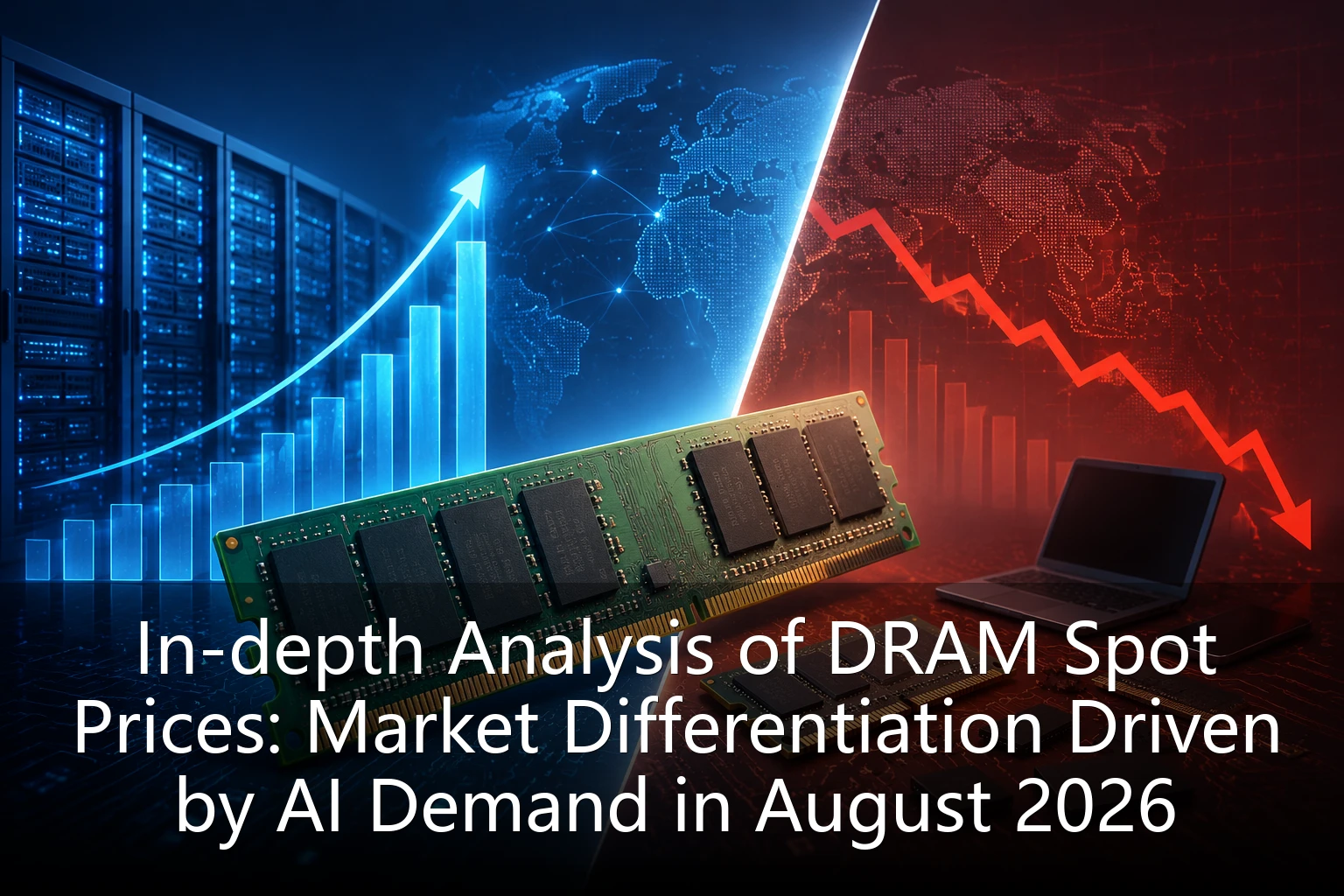
In August 2026, the global DRAM spot market presented an unprecedented differentiated landscape. With the rapid development of artificial intelligence technology, server DRAM demand surged strongly, while the consumer DRAM market continued to slump. This polarization phenomenon is reshaping the entire price system and market landscape of the memory chip industry.
Current Status Analysis of DRAM Spot Prices
According to the latest market data, in August 2026, DDR4 spot prices have stabilized above the $42 mark, an increase of about 3% from the previous month. Notably, DDR5 spot prices rose by another 0.33%, reaching a new high for this period. This phenomenon forms a stark contrast to the DRAM market in 2025, when DRAM prices generally fell by more than 20%.
Looking at segmented markets, server DRAM price increases have been particularly significant. DDR5 RDIMM (Registered DIMM) contract prices rose by 3.2%, while LPDDR5X prices, mainly used for AI servers, increased by as much as 5.6%. Meanwhile, consumer DRAM prices continued to face pressure, with notebook DDR4 memory prices falling by 1.8% and desktop DDR4 memory prices decreasing by 2.3%.
Main Reasons for Price Fluctuations
The primary factor leading to the differentiation of DRAM spot prices is the surge in AI server demand. With the widespread application of large language models like ChatGPT and Claude, and explosive growth in AI training and inference requirements, data centers' demand for high-performance DRAM has risen sharply. Market analysts estimate that in the second quarter of 2026, global AI server DRAM demand grew by more than 80% year-on-year.
Secondly, capacity adjustment strategies by DRAM suppliers have also affected market supply and demand. Facing the continued downturn in the consumer electronics market, major DRAM suppliers such as Samsung, SK Hynix, and Micron have adjusted capacity allocation, shifting more production to high-end products like server DRAM and HBM (High Bandwidth Memory). This capacity transfer has further exacerbated the oversupply of consumer DRAM and the supply tightness of server DRAM.
Third, the rise of Chinese memory chip manufacturers is also changing the market landscape. Chinese DRAM manufacturers represented by CXMT have made significant technological progress in recent years and have begun supplying DDR4 and DDR5 products to the market. Notably, CXMT recently rejected Apple's request to lower DDR4 prices, demonstrating the enhanced bargaining power of Chinese memory chip manufacturers.
Analysis of Market Differentiation
The current DRAM market shows a clear "the rich get richer, the poor get poorer" Matthew effect. On one hand, the server DRAM market is in short supply, especially for products like HBM4 and DDR5 RDIMM used in AI servers, with prices continuing to rise and some models even facing shortages. According to industry sources, HBM4 spot prices have risen by 20% since the beginning of the year, and the supply tightness is unlikely to ease in the short term.
On the other hand, the consumer DRAM market faces severe inventory pressure. With declining shipments of consumer electronics such as smartphones and PCs, consumer DRAM inventory levels continue to rise, putting pressure on prices. Particularly in electronic component trading markets like Huaqiangbei, consumer DDR4 memory prices have fallen to historical lows, and some distributors have had to adopt "cutting losses" clearance strategies.
From a regional perspective, DRAM price differentiation also shows geographical characteristics. Consumer DRAM price declines are more pronounced in Asian markets, while server DRAM price increases in North America and Europe are higher than the global average. This regional difference reflects the varying degrees of AI technology adoption and consumer electronics market prosperity in different regions.
Industry Expert Views
Regarding the current differentiated DRAM market, several industry experts have shared their views. Semiconductor analyst Wang Ming stated: "The explosive growth in AI server demand is reshaping the DRAM market landscape. It is expected that server DRAM prices will continue to rise in the next 12 months, while consumer DRAM prices may hover at the bottom for some time."
Memory chip industry researcher Li Hua pointed out: "The rise of Chinese memory chip manufacturers is an important factor affecting the DRAM market. With the technological progress and capacity expansion of Chinese companies like CXMT and YMTC, the competitive landscape of the global DRAM market is changing, which will help balance DRAM price fluctuations."
Investment analyst Zhang Wei analyzed from an investment perspective: "The polarization of the DRAM market provides new investment opportunities for investors. It is recommended to focus on companies related to high-end DRAM products such as HBM and DDR5, which will achieve excess returns in the AI era. Meanwhile, the valuation of consumer DRAM companies has reached historical lows and possesses long-term investment value."
Future Outlook
Looking ahead, the DRAM market may show the following development trends:
- AI server demand will continue to be strong, driving high-end DRAM prices to maintain an upward trend. With the launch of next-generation AI models like GPT-5 and Claude 4, demand for high-performance DRAM will further increase.
- The consumer electronics market may recover in the second half of 2026, leading to a stabilization and recovery of consumer DRAM prices. Especially with the popularization of 5G smartphones and AR/VR devices, demand for mid-to-high-end DRAM is expected to increase.
- The market share of Chinese memory chip manufacturers will further increase, changing the competitive landscape of the global DRAM market. It is expected that by 2027, China's share in the global DRAM market will reach around 15%.
- DRAM technology will continue to develop towards higher performance and lower power consumption. New-generation DRAM products such as DDR6 and LPDDR6 are expected to be commercialized by 2027, further promoting the development of the memory chip market.
Conclusion
The DRAM spot market in August 2026 showed a clear differentiated landscape, with strong growth in AI server demand forming a stark contrast to the continued slump in the consumer electronics market. This differentiation phenomenon is reshaping the entire price system and market landscape of the memory chip industry.
For memory chip suppliers, it is necessary to flexibly adjust capacity allocation, allocate more resources to high-end products like server DRAM and HBM, while optimizing inventory management for consumer DRAM. For downstream application manufacturers, especially builders of AI servers and data centers, it is necessary to plan DRAM procurement strategies in advance to cope with price fluctuation risks.
For investors, the polarization of the DRAM market provides new investment opportunities. On one hand, one can focus on companies related to high-end DRAM products such as HBM and DDR5; on the other hand, the valuation of consumer DRAM companies has reached historical lows and possesses long-term investment value.
Overall, the DRAM market is undergoing a structural transformation, and the rapid development of AI technology will become a key factor driving the development of the DRAM market. In the future, with the deepening of AI applications and the gradual recovery of the consumer electronics market, the DRAM market is expected to usher in a new growth cycle.